The name of volume 1 of my short fiction compilation is Target Rich Environment

Back at the end of February I put up a blog post asking for suggestions for the title of my short fiction collection.
https://monsterhunternation.com/2017/02/27/help-name-my-short-fiction-collection/ 

The winner was Target Rich Environment, which was suggested by Logan Guthmiller.

There were a ton of good ones. Thanks everybody.

And if you aren’t familiar with this project, Baen is publishing two collections of my short fiction. I don’t know the release date yet, but Volume One will be called Target Rich Environment, and it will include the following stories:

Tanya: Princess of the Elves

Dead Waits Dreaming

Sweothi City

The Bridge

Detroit Christmas

Murder on the Orient Elite

Father’s Day

Destiny of a Bullet

Bubba Shackleford’s Professional Monster Killers

Blood on the Water

The Losing Side

The Great Sea Beast

Force Multiplier

The Adventures of Tom Stranger, Interdimensional Insurance Agent

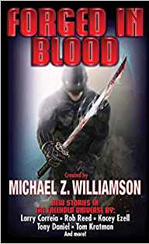
A snippet from my story in Forged in Blood

Forged in Blood is an anthology set in Michael Z. Williamson’s Freehold universe. The stories go from ancient history to the distant future. I love when I get to write samurai.


Here is the description:

NEW STORIES OF A MYSTICAL KILLING SWORD SET IN MICHAEL Z. WILLIAMSON’S FREEHOLD SERIES 

WARRIORS AND SOLDIERS TIED TOGETHER THROUGHOUT TIME AND SPACE.

From the distant past to the far future, those who carry the sword rack up commendations for bravery. They are men and women who, like the swords they carry, have been forged in blood. These are their stories.

In medieval Japan, a surly ronin is called upon to defend a village against a thieving tax collector who soon finds out it’s not wise to anger an old, tired man. In the ugliest fighting in the Pacific Theater, an American sergeant and a Japanese lieutenant must face each other, and themselves. A former US Marine chooses sides with outnumbered Indonesian refugees against an invading army from Java. When her lover is stolen by death, a sergeant fighting on a far-flung world vows vengeance that will become legendary. And, when a planet fragments in violent chaos, seven Freeholders volunteer to help protect another nation’s embassy against a horde.

Featuring all-new stories by Michael Z. Williamson, Larry Correia, Tom Kratman, Tony Daniel, Micahel Massa, Peter Grant, John F. Holmes, and many more.

Here is the intro to mine.

##


When you hit a man with a sword, it can go clean or ugly. A clean hit and you barely even feel the impact. Oh, your opponent feels it. Trust me. But for the swordsman, your blade travels through skin and muscle as if it is parting water. Arms can come right off. Legs are tougher, but a good strike will cut clear to the bone and leave them crippled. A katana will shear a rib like paper, and their guts will fall out like a butchered pig. Then with a snap of the wrist the blade has returned and the swordsman is prepared to strike again. Simple. Effective. Clean. I’ll spare you all the flowery talk the perfumed sensei spout about rhythm and footwork that inevitably make killing sound like a formal court dance, but when you do everything just right, I swear to you that I’ve killed men so smoothly that their heads have remained sitting upon their necks long enough to blink twice before falling off.

However, an ugly hit, means you pulled it wrong, or he moved unexpectedly, the littlest things, a slight change in angle, a tiny bit of hesitation, upon impact you feel that pop in your wrists, and then your sword is stuck in their bone, they’re screaming in your face, flinging blood everywhere, and you have to practically wrestle your steel out of them. Whatever bone you struck is a splintered mess, usually the meat is dangling off in ghastly strips. Some men will take that as a sign to lie down and die, but a dedicated samurai will take that ugly hit and still try to take you with him, just because in principle if a samurai is dying, then damn it, he shouldn’t have to do it alone. It can be a very nasty affair.

The tax collector died very ugly.

I only wanted to be left alone.

##

Kanemori was sitting by the stove, absorbing the warmth, debating over whether it was too early in the afternoon to get drunk, when there was a great commotion in his yard. Someone was calling his name. It wouldn’t be the first time in his long life that someone with a grudge had turned up looking for him, but this sounded like a girl. He rose and peeked out one of the gaps in the wall that he’d been meaning to repair, to see that it was the village headman’s daughter trudging through the snow with determination.

“Go away!” he shouted.

“Kanemori! The village needs your help.”

The headman always wanted his help with something, the lazy bastard. A tree fell on old lady Haru’s hut. Or Den’s ox is stuck in the river. Or please save us from these bandits, Kanemori-sama! And then he’d have to go saw wood, or pull on a stupid ox, or cut down some pathetic bandit rabble. He knew it was usually just the headman trying to be social, but it was a waste of his time. He didn’t belong to the village. He’d simply had the misfortune of building his shack near it.

“What now?” He bellowed through the wall.

“The new Kura-Bugyo is going to execute my father!”

“What did your imbecile father do to make the tax collector angry this time?”

“The last official was honest, but the officials this year are corrupt. They take more than they’re supposed to. They take the Lord’s share, and then they take more to sell for themselves! Father refused to give up the last of our stores. If we do we’ll perish during the winter.”

Of course the officials were corrupt. That’s what officials were for.

The girl was about ten, but already bossy enough to be a magistrate. When she reached the shack she began pounding on his door. “Let me in, Kanemori!”

“Go away.”

“No! I will stay out here and cry until I freeze to death! Your lack of mercy will cause my angry ghost to haunt you forever. And then you will feel very sorry!”

Kanemori sighed. Peasants were stupid and stubborn. He opened the door. “What do you expect me to do about it?”

“You are samurai! Make them stop.”

“Oh?” He looked around his humble shack theatrically. “Do I look like Oda Nobunaga to you? I am without clan, status, or even basic dignity. Officials aren’t going to listen to me. Do you think I moved to the frozen north because I am so popular?”

“You are the worst samurai ever!”

##

In defense of the clumsy butchery that passed for a battle against the corrupt tax collector and his men, my soldiering days were over. It had been many seasons since I’d last time I had to hit a man with a sword, so I was rusty. When your joints ache every morning, the last thing you want to do is practice your forms, so my daily training consisted of the minimum a retired swordsman must do in order to avoid feeling guilty. Why do more? I had no Lord to command me, no general to bark orders at me—The only person who’d done so recently was my second wife, and I’d buried her two winters ago—and if I spent all my energy swinging a sword who was going to feed all these damnable chickens?

It isn’t that peasants can’t fight. It is that they’re too tired from working all day to learn to fight. A long time ago some clever sort figured that out, traded his hoe for a sword, started bossing around the local farmers, said you give me food and in exchange I’ll protect you from assholes who will kill you, but if you don’t, I’ll kill you myself, and the samurai class was born. From then on, by accident of one’s birth it determined if you’d be well fed until you got stabbed to death, or hungry and laboring, until you starved… Or got stabbed to death.

Spare me the history lectures. I actually do know where samurai come from. I was born buke. I slept through the finest history lessons in Kyoto. You would not know it to look at me now, but I was once a promising young warrior. It was said that handsome Hatsu Kanemori was a scholar, a poet, and the veritable pride of my clan, and high ranking officials were lining up to offer me marriages to their daughters… until one day I finally told my Lord I was sick of his shit. Then I promptly ran away before he could decorate his castle wall with my head.

Now, the life of a ronin is a different sort of thing entirely. Samurai live well, but they’re expected to die on behalf of their Lord. Ronin live slightly better than dogs, and are expected to die on behalf of whichever lord scraped up enough coin to hire us. Being a wave man retains all of the joys of getting stabbed to death, but with the added enticement of being as miserable and hungry as a peasant, up until when you get stabbed to death.

But at least you are your own boss.

##

Here are all the contributors. One nifty thing is the stories go in order, so my character is descended from the one Zach Hill wrote, and Mike Massa’s story follows mine, but jumping forward a few hundred years, and so on. It’s a pretty cool premise. 
Zachary Hill
Larry Correia
Michael Massa
John F. Holmes
Rob Reed
Dale Flowers
Tom Kratman
Leo Champion
Peter Grant
Christopher L. Smith
Jason Cordova
Tony Daniel
Kacey Ezell
Michael Z. Williamson

Ask Correia 18: World Building

The Ask Correia posts are what happen when somebody asks me a writing related question, and my answer gets so big that it turns into a blog post. In this case I recently announced two new collaborative projects, and how I was working on building two different worlds at the same time, and people asked if I had a method for that. (I’m also teaching a 4 hour master class at FyreCon on this topic, so I’d better!)

I love designing new worlds. I’ve done some where I take our existing world and twist it somehow, others that are alternative history, and some that are just scratch built. So here is a peak behind the scenes of how I create new fictional settings.  Note, as usual there is no such thing as Rules of Writing, and anybody who tells you there is only One True Path is full of crap and probably doesn’t sell many books, because for every rule they cite I can probably find a bestseller who breaks it. These ideas are just the way I do things, but you can do it differently, the only important thing is that your readers like the results.

Sometimes you have a story in need of a place to set it, and other times you’ve got a setting you want to write about, but don’t know what story to tell in it. Me personally, I’m almost always a Story First kind of guy. Usually I think of the story I want to tell and then I go about building the world that best facilitates me telling that story.

If you have an awesome idea for a setting, but don’t know what to do with it, that’s fine. In that case go through the world and see what features appeal to you. Then start imagining what kind of people would live there, and what kind of conflicts they would get into. A strong setting is going to suggest stories. That’s why some IPs have amazing staying power and turn into shared worlds with lots of different authors coming up with things to do there. Build an interesting enough setting and you’ll never lack for ideas for what to do in it.

Always Be Asking

Since I usually start with a basic plot idea, the first thing I do is think about what does my world need to have/allow for me to write this? Some are pretty obvious. Monster Hunter is our world but supernatural stuff exists in secret. Others ideas require something more complicated. For Son of the Black Sword I needed to figure out a world with brutal caste systems, where the low born are basically property.

Take those must haves, and then ask yourself if that’s how things have to work here, what else would change? Always be asking yourself how are those required things going to affect other things?  This doesn’t just make your setting stronger, but it supplies you with tons of great new story ideas.

For the last week I’ve been going back and forth with John Brown about our upcoming sci-fi project. When I’m collaborating my methods are basically the same as when I come up with worlds myself, only I’ve got an extra brain to work with.

We had an existing basic plot idea that we’d come up with at LTUE based on all the sci-fi things my son thought were cool (giant robots, giant alien monsters, space fights, bandits). That really basic skeleton was what we started with, but then we needed to fill in the blanks.

We started with the basic premise of pirates who steal giant robots… Why? Well, there’s got to be a market for these things. Why can’t people just buy them? Gun… er… I mean ROBOT control. Okay, cool. Interesting complication. What kind of people would still want to get their hands on giant fighting robots even though it could draw the ire of the authorities? Well, just like real life there’s lots of different reasons people want illegal weapons now, from basic self-protection to overthrowing governments. Tons of different directions you could take that, but since we’re writing about people who could be “good guys”, let’s go with the self-defense angle.  What are you defending yourself from that you would require an illegal, and very expensive, battle robot?  Obviously something you can’t just shoot with a regular gun… ergo GIANT MONSTERS.

Which brings us to another important element of world design:

THE RULE OF COOL

When presented with a few options for how to accomplish something, pick the awesome one. Pick the one that makes your story more entertaining. Pick the one that you are the most excited to write about, because when an author is having fun writing it, that’ll come through the page and the readers will feel that excitement. It’s all about contagious enthusiasm.

Grimnoir used dirigibles because I wanted to have cool dirigible fights. That was it. However, then I had to tweak the rules in a way so that their use made sense and felt organic and true to the world. I had to look at why they lost to heavier than air craft in real life, and then add something which would have kept them competitive.

You can’t just have something awesome that doesn’t make sense because that’s going to kick readers right out of the story. Remember, the goal is immersion. You want the reader to lose track of time. When you screw something up like that the immersion is broken, they’re reminded that this isn’t real, it’s just a book. You have just failed that reader.

Your cool idea still needs to fit somehow. It needs to be organic to the story. If you introduce some super awesome plot element, but it feels like it is shoehorned in there, simply because it is groovy, unless you are writing a story that is purposefully silly (anything can happen in Tom Stranger for example) readers are going to get annoyed. Annoyed readers don’t buy the rest of your stuff.

TV shows and movies can get away with this more because they move at a different pace than a book, and by the time the watcher’s brain is processing the giant plot hole they just saw, the movie has already moved onto the next scene or distracting visual treat. Books move at a different pace, and the way most people read, their brains are still processing the information they just read while they are reading the next part. Nonsensical things are far more jarring in written form.

In the Force Awakens, they’ve got a planet sized weapon that sucks in a star (apparently then they drive that planet to the next star?) and shoots it across the galaxy (at a wacky velocity that is still dramatically visible) but it is all covered in an energy shield that you have to be going light speed to go through (why not just accelerate an old freighter to light speed and obliterate Star Killer?) so they fly the Millennium Falcon through the shield and shut down light speed manually before hitting the surface…

Oh man. If I put that in a book I’d never hear the end of it. But for most watchers at the time they aren’t going to catch all that in time to break their immersion. Even the clever audience members are going to note that stupid bit, but they are going to stay in the theater because they’re already watching the next cool visual. Sure, they’ll start picking it apart during the drive home from the theater, but during the movie they just shut up and enjoyed their awesome.

Writers can’t do that. That’s why books about movies have to make more sense and provide more context and information than the movie they are adapting. You screw up a book and the reader gets the effects as soon as the words are processed. They sigh and put the book down for a moment.  You lost them. Enjoyment squashed. If they come back it will be with some reluctance. Author fail.

One handy cheat, if you want to have some cool piece of tech or magic thing, write that scene from the PoV of somebody who doesn’t know how that item works, just that it does. A space marine on a ship isn’t going to know how the FTL drive works. Space ship go fast. It is what it is. Hell, we all drive cars yet most of us couldn’t explain the details of how the internal combustion engine works. On some things, you don’t need to overthink them. If it isn’t stupid and it feels organic to the setting, the reader will give you a pass. Basically anything that fits in context, the readers aren’t going to stress. Anything that feels broken or stupid is going to bug them.

Back to asking questions.

For our plot, we needed giant battle mechs fighting giant monsters, but let’s think through the problems with walkers. Why would a mech be preferred over something simple, cheap, and low profile like a tank? That suggested use on terrain that would favor that kind of weapon system over something that drove, hovered, or flew, which led directly to designing the nature of our planet. Answering that question led to an interesting setting and a cool visual.

Now you don’t need to provide a doctoral thesis and annotated bibliography explaining how every cool thing works (unless you are writing Hard SF and your readers are into that), but it just has to feel like it makes sense in the context of the story. There is always going to be one nitpicky bastard who is going to complain about everything, but that guy complains even when he’s wrong and the author got all the science right. Screw that guy. Nobody likes him in real life either.

We’ve got mechs going down to this planet to protect people from giant monsters, why? What is worth it down there?  Our original thought was they were mining something valuable… Okay, but that raises the same question as in the movie Avatar how come the humans didn’t just tow over an asteroid and kill all the annoying smurf people and their pterodactyls, then mine the unobtanium unmolested once the dust settles? So that gave us another kind of cool idea why that wouldn’t work, and our miners turned into harvesters.

We needed far flung human colonies. That required space travel between star systems. How does mankind travel? There are a few common methods that get used over and over in sci-fi. What are the pros and cons of using that method? What story problems does that method introduce? We decided to go with the common trope of gates, but the biggest reason we picked that one was that we were writing about criminal smugglers, and having choke points which could be controlled by government officials added interesting story complications, which led to the idea of having illicit criminal gates and creative work-arounds.

The space travel questions led to questions of history and what would need to happen between our world right now, and this world in the future, for us to get to where they are. Of course this process led to even more cool ideas we could exploit later.

John posted the following on Facebook the other day:  An insight into how Larry Correia develops story ideas. No hand wringing or stress. Just “send me your cool ideas,” “what would be cooler between these ideas,” “hey, this would be fun,” and “what would we need to do to make this awesome thing work and still be believable.” I’m having a blast thinking through the ideas and responding back and forth. This is the good part of writing.

I hadn’t really thought about this too much before he posted that, but yeah, that’s pretty much it.

Every question you ask yourself gives you a chance to come up with something better. It helps pick apart potential flaws and weak spots. If you really really can’t think of a way to stick in some specific cool idea, that’s fine, save that thing for something else. Writers should always be writing, and there is no such thing as a wasted idea. All of your cool stuff will get used eventually.

The fantasy project that I recently outlined with Steve Diamond started out as a story that the two of us pitched for an existing IP. In that case we had a fleshed out world to work with, and two creative types looked at it, and thought, damn, it would be really cool to tell a story from the perspective of this specific group of people which hasn’t been told before. So we outlined that happening and came up with a really neat story, and pitched it. When that project dried up, Steve and I were left with this really cool plot, but it was set in a world that we could no longer use.

But it’s like I said, you keep writing and there are no wasted ideas. The same plot can be used in a variety of settings (Red Harvest turned into Yojimbo which turned into Fistful of Dollars which turned into Last Man Standing). Years later when my publisher asked if I had any other collaborations in mind, Steve and I pulled out that old outline and dusted it off. We had an awesome plot and characters, and now we just needed to build a world to fit it.

We started out by tossing everything we could no longer use. Anything that originated in this other IP was not ours. Obviously that left some pretty big holes, so the discussion turned to how to fill those in. And this is where it gets exciting.

I’ve done quite a bit of writing now in other people’s IPs, a few novels, and a ton of short fiction. It is fun to play in somebody else’s sandbox but it can also be a challenge because you are so limited in certain specific ways, and by the rules that the original creators have established. They’ve got a road map already. When you’re creating your own stuff you are a trail blazing off roader cutting a new path in your 4×4.

We went off in some crazy new directions. Steve and I did the same thing John and I did. We looked at what we needed, and then we started filling in those holes, and asking lots and lots of questions. Every decision has repercussions. Nothing exists in a vacuum. And a few days later we had something new, interesting, unique, and most importantly, really cool.

Using Cultural Analogs

You see this all the time in fantasy, where NotEngland is fighting against NotFrance, but the NotVikings invade, and the NotMongol Horde comes riding across the plains. Cultural analogs are super common. As much as critics like to get all huffy and bitchy about that, there’s nothing inherently wrong with borrowing from familiar real world cultures. As long as it is entertaining you can get away with it.

On the plus side it establishes some fundamentals with the reader easily. You’ve got longbow archers with English sounding names fighting knights with French names, it paints a quick picture. They’ve read a hundred books and seen a dozen movies like that already. Readers are going to subconsciously assume that everything which isn’t pointed out as being different is probably the same as what they’re already expecting. Those are their defaults.

On the downside, it’s been done a million times. But the reason something gets done a million times is because it works. This is a competitive business, so if you’re doing something familiar then you need to make yours stand out somehow (I’d recommend being excellent). If you use a cultural analog which isn’t as familiar for your audience, it is unique, but it may require a bit more work to set the stage. It still creates a visual waypoint, but the audience just might not have as much groundwork laid. There aren’t as many epic fantasies about NotIndia as there are about NotEngland, but people get the idea.

Now critics are going to bitch no matter what you do. If you have a western basis to your fantasy you will be called tired and clichéd (and probably racist) and if you use a non-western basis then you are guilty of cultural appropriation. So as usual, just tell the critics to kiss your ass and get back to writing. Nobody really gives a crap what they think anyway.

Personally, I like borrowing from all sorts of different places. It keeps things interesting, unique, but familiar enough that the reader can concentrate on the important stuff, being entertained rather than being lost.

Another possibility is just making up something entirely unique and original, not based on any Earth culture at all. You are free to do whatever you want. There’s no reference for the readers, so you’ll need to do a good job painting them a picture. Just don’t get so clever with making up new stuff that the readers get confused and lost, adrift on a sea of made up words. If you’re going to write something dense and confusing, where the reader can’t get a bearing, you’d better be one damned compelling wordsmith to keep their interest.

Nuts and Bolts

When you’re creating something from scratch, you’ve got to think through how it all fits together in a way that makes sense. I’m talking things like resources, society, and economics.

I’ve often seen the book Guns, Germs, and Steel recommended in these discussions for authors to get ideas about world building. It’s a pretty good read about the clash of cultures and their relative advantages/disadvantages. (it has been years, and I don’t recall what now, but I disagreed with some of his conclusions, however it was a way better read than most dry anthropology books).

Geography matters a lot. When building a society realize that people are a product of their environment. Think about things like weather and distances.

If you’ve got a world without electricity, that is going to cause some issues. If you can’t refrigerate food, eating is a whole lot different. Horses don’t work like fleshy motorcycles. If you’ve got magic, if it is common, how is it going to change your world. You can’t have super common easy to use magic that can do all sorts of miraculous stuff, and it not have some repercussions. The commonality of cell phones has made it a lot tougher for horror writers now than in the 80s. Whether you are introducing magic or new technology, it’s going to do something to your world. If everybody can cast Create Light Level 1, it really sucks to be a candle maker.

Think about what your people have got to work with. If you’ve got a little tiny poor country, it isn’t going to field ten thousand armored knights. That’s a giant resource suck. On the other hand, if you’ve got Star Trek style replicators that can just make whatever you want, whenever you want it, then that’s going to cause all sorts of other complications. When you can push a button and get free stuff, people’s motivations change. So don’t introduce crap you can’t deal with.

In Grimnoir I needed healing magic, mostly so I could have some truly brutal action sequences, and do it in a manner that the main characters could be back in action in time to narrate the next scene. To keep it from granting everybody functional immortality I had to put in some limitations. I made healers scarce. But just like real life, when a resource is scarce but with high demand, prices rise. So in Grimnoir healers are worth their weight in gold, literally (or in the case of statist countries like the Imperium, you are worth your weight in not being tortured and having all your loved ones executed).

In Son of the Black Sword I’ve got a magic system based on two scarce resources. One is super powerful, but it is being used up and it is not renewable. The other is renewable, but since it is extracted from the body parts of dead demons, good luck getting it. So in this book magic isn’t just about Hey Look at This Cool Thing I Can Do, it’s also a measure of wealth and political capital. Having black steel becomes a big friggin’ deal. It’s like how a country gets more respect in international affairs if they’ve got nukes. There’s a whole underground black market economy for magic users.

You don’t need to reinvent the wheel. I don’t remember which famous sci-fi author said it, but if you’re writing what’s basically a rabbit, you don’t need to describe a rabbit, hops like a rabbit, has ears like a rabbit, and then call it a Fleerp. It’s just a friggin’ rabbit.

Also, sticking the word “Space” in front of normal things doesn’t suddenly make it sci-fi. To use an infamous example, if you refer to a Space Diaper, but you’re just talking about a diaper, that’s lame.

The more you stray from assumptions that readers default to, the more likely you are to confuse/lose them. So stray all you want, but try to keep it useful. Don’t switch expected norms up for pointless reasons. If you don’t specifically say everybody has three legs, readers are going to assume people still have two. Every time you rename some normal thing, that’s one more thing that a reader is going to have to keep track of. It’s like some of the classic sci-fi where they were super excited to rattle off the names of a bunch of high tech inventions the characters were using, but most readers just got bored and skimmed until the plot started progressing again.

When you do change things up, try and provide some context so the reader can figure out what’s going on. Son of the Black Sword doesn’t use western military ranks, like sergeant, lieutenant, etc. Because the military structure is based on historical India crossed with Thailand. So when I refer to somebody as a Nayak or a Risaldar, somewhere near that I need to provide clues that’s his rank, and at least what his relative standing is compared to the characters he’s interacting with.

Some of the coolest parts of world building are the little things. Pay attention to things like what the people eat, how they dress, what do they do for fun, what music they listen to, etc. The stuff that doesn’t pertain directly to your plot you aren’t going to dwell on, but it’s those little things that flesh your characters out, give the place some depth, and make it feel like people actually live there.

I recently watched the Ghost in the Shell movie. I liked it quite a bit. I only had one real complaint about the world building. On all the sweeping establishing shots of the big city, with the giant holograms, it just didn’t feel right. It didn’t feel lived in. But when they got down to the gritty street level, or the apartment blocks, or the cemetery, then it felt organic, it felt like a real place. Your book is the same way, big and glossy is cool and all, but it’s the little things that make it feel a real place someone could visit.

You Need To Know Everything but the Reader Doesn’t

This is a very important point. As the master of this new universe you need to know how everything works. Why is this thing here? Who are these weird people? Why did that big thing happen? But you don’t need to tell the reader all that unless it matters for this one particular story you are telling.

One problem writers run into is that we over explain. We’re so very proud of this nifty world that we made up that we want to show the readers ALL OF IT RIGHT NOW. This leads to things like boring info dumps or odd digressions into pointless boring subplots. Note the recurring theme there is boring. You can get away with damned near anything in a book as long as you aren’t boring.

Most readers aren’t stupid. You don’t need to hold their hand and over explain stuff, plus that will quickly annoy all the smart readers who are now bored. If the nitty gritty details are important for some reason, then explain away, or if those details are unique or entertaining to explain (that describes most of Cryptonomicon) have fun. But for most things, just let stuff happen and the readers will figure it out.

As a retired accountant who loves econ and finance, I spent a bunch of time figuring out how the economy of Lok works, but you see almost none of that in Son of the Black Sword. I might think that stuff is fascinating, but I know most of my readers don’t read Thomas Sowell for kicks and giggles. My job is to write about a bad ass super swordsman fantasy version of Judge Dredd turning into a fantasy version of George Washington, not to dwell on how the paper currency of the Banker sub-caste is the worker caste’s greatest weapon in great house politics.

But the important thing is I know that, so anytime I’m writing a scene where that behind the scene stuff is involved, it stays consistent. And who knows, maybe at some point that subplot might be explored in a way that’s interesting.

Try not to overwhelm people with too much information at once. Especially if you are working with naming conventions that are odd. In Son of the Black Sword most of the people and place names are Indian, southeast Asian, or east African in origin, so they’re not easily remembered by western readers. I try not to dump twenty of them on the reader on page one, because they aren’t going to remember who is who, and too much info and readers start to skim. Introduce a couple at a time and give people a chance to remember who is who.

Don’t blow all your cool stuff at once. Sometimes you know exactly how something works, but there isn’t a good place to get into it. I knew exactly who Agent Franks was, but there wasn’t a good spot in the first book to get into that, so I teased it a tiny bit, made the readers curious, and then revealed (part of) his identity in the 2nd book. And I had so much unrevealed backstory built in that eventually he got his own book.

I get a lot of comments from people who are impressed when I reveal something I teased a few books earlier. That’s really not that big of a deal, it’s just about being patient enough to save something for when it has the maximum impact.

How Much is too Much?

World build enough that you are confident to start writing the actual story. You can always go back and fix things later. It’s too much when you are postponing actual work in order to do something that you consider more fun.

I get the same question about research or plotting, usually from somebody who has been making notes about the same project for the last four or five years without actually producing any fiction. These people love that stuff, hate the actual writing part. If you are procrastinating the writing to keep world building, then it’s too much.

Quit screwing around. You aren’t creating an RPG supplement. You don’t need to make a loot table for every dungeon on your planet. At some point you need to put your happy ass in front of the keyboard and write the friggin’ story.

Have Fun

The most important thing about world building is that the author and the readers have a good time. So go make up some awesome stuff and GET PAID!

Behind the Scenes of Me Filming Gun Stories

I was in Denver yesterday filming for Joe Mantegna’s Gun Stories on the Outdoor Channel. I was on last season, and apparently people liked me so they invited me back. Most experts they use on TV shows are Serious Experts, and I’m more of Not Very Serious Expert. 🙂

Before that though I got to sit down with Michael Bane and do this interview which was posted live to the Outdoor Channel’s page.

https://www.facebook.com/OutdoorChannel/videos/10155287857572884/?pnref=story

I had a lot of fun. The other writer they’ve got on the show is Stephen Hunter, who is a really super nice guy, and a living legend. Yes. His Earl Swagger books are the reason why Earl Harbinger is named Earl.

So if you’ve got the Outdoor Channel, check it out.

Announcing Two New Correia Collaborations, a Sci-Fi with John D. Brown and Fantasy with Steve Diamond.

I can go ahead and announce the two new collaborative projects that I’ve been hinting about.

The first project is a fantasy novel co-written by me and Steve Diamond.

The second is a sci-fi novel co-written by me and John D. Brown.

Those names will be familiar to my regular readers. I’ve Book Bombed both of them, and have known these guys for years. They are both extremely talented authors, and I’m excited to be working with them.

I recently wrapped up a few big projects, so Toni Weisskopf approached me if I had any ideas for other collaborations. (I’d done a series with Mike Kupari, was wrapping up the edits on the last of the John Ringo MHI novels, and have one outstanding with Sarah Hoyt). I pitched her these two, Toni liked them, the other authors who I’d come up with the ideas with were all in, and as of this morning it sounds like all the contracts are signed and are on their way back to Baen. So here goes:

The Fantasy Project

Steve Diamond is the author of the YA thriller Residue, and a bunch of short fiction, including a story about Vatican Combat Exorcists in the upcoming Monster Hunter Files anthology. I first met Steve when I was a relatively new author and he interviewed me for his book review site, Elitist Book Reviews.  Then I found out he was a fellow accountant and we hit it off. We ended up in the same game group (Writer Nerd Game Night, so if you read those serials, you got to see Steve first learning how to write fiction). We also wrote the Son of Fire/Son of Thunder short stories together.

Then when my writing career started doing really well, I realized I would have to quit my day job as a finance manager for a defense contractor, so I hired Steve to be my assistant. We worked together for a year while I trained him to do my job, and he took over when I left.

This idea is about four years old, and we originally brainstormed it to be a story set in someone else’s IP. I had been approached to write that project, only it fell apart for business reasons unrelated to us, and got shelved. But in the process we worked up like a 20 page detail outline for what was a really, really cool story, with some neat characters.

That outline sat on the shelf for years.  I still wanted to write it, because the characters and plot were just that interesting, but the setting didn’t belong to us. So when Toni asked for collaboration ideas I sat down with Steve, and we started thinking through how we could lift the characters and plot out of one setting we didn’t own, and make up a new world to stick it into. And the fun part was that once we weren’t constrained by someone else’s already established rules, we came up with some really nifty ideas.

The brief pitch, it’s a grunt’s eye view of a war (think WW1 on the eastern front) in a world based on Slavic mythology and grimdark fairy tales. It’s about a young man who has been avoiding conscription, until something nefarious steps in and violently shoves him toward his destiny.  Then it’s off to the trenches, magic and mustard gas, wearing armor made out of dead golems and powered by the souls of the damned, where the troops are more frightened of the secret police behind them than the monsters in front of them.

Yeah. This one is bad ass. 😀

The Sci-Fi Project

John Brown is the author of the Servant of a Dark God series, and the Bad Penny thrillers. We both started out around the same time, and as two relative nobodies with no chance in hell of getting our publishers to pay for us to go on book tour, we teamed up to send ourselves on book tour. Usually by picking a major city, schmoozing our way into getting an official book signing at one store there, then getting a map to every book store in the region, and driving from store to store for several days straight to meet the staff, sign the stock, and hopefully get some new fans. So we spent a whole lot of time in cars together. And in fact, the scariest drive of my life was with John Brown, from Denver to Evanston in a blizzard, with me driving a Ford Focus. Not fun.

John and I had teamed up to teach a How To Plot A Novel in an Hour class a couple of times at LTUE. That’s where some authors are given some random ideas from the audience and show that they can tie them together by plotting out a whole novel on the fly. The problem with those kinds of panels is that when you ask the audience for plot elements, it is like a competition to see who can throw out the stupidest crap. And inevitably the professional authors make even the weirdest ideas work (that’s how Jim Butcher wrote Lost Legion with Pokemon in Codex Alera), but it’s usually silly and a lot of time is wasted.

Two years ago John volunteered us to do it again (I’m kind of the Vanna White to his Pat Sajack during these), and this time rather than get hung up on dumb random suggestions, we’d start with all the elements already written down. And to keep it a challenge, instead of an audience member, we drafted my (at the time) 10 year old son, and basically asked him “Okay. Tell us everything you think would be awesome in a sci-fi story.”

And of course, being a ten year old boy, the answers were “giant robots, space pirates, murderers, giant monsters, bandits, etc.” And he even DREW THE GIANT ROBOTS.  (and let me tell you, nobody can envision a crazy fight sequence like a ten year old).

So armed with these extremely awesome plot elements, we went to LTUE, and in front of the audience, over two hours, came up with a basic world build, plot structure, theme, characters, and sketched out most of the scenes. All to show the aspiring writers that this stuff ain’t that complicated. Only when we got done, I looked at what we had and thought… Damn… This could use some more thought and tweaking, but we could actually write this book.

A few years later, and we are.

The brief pitch: In a universe where advanced military tech is limited to ‘civilized’ worlds, there is a team of thieves who specialize in stealing war mechs, and selling them to groups which are normally banned from possessing anything that dangerous. The pirates don’t usually ask questions about what the stuff they procure is used for. Giant killer robots are just tools, and who is some bureaucrat to decide who can and can’t be armed?  Only this time, they see what the client is using their merchandise for and it’s just too much to stand. But Warlords really don’t like it when you back out of a deal, and there’s hell to pay.

This one is going to be really cool. And I’m excited, because though I’ve done some sci-fi (D6 is like 15 minutes in the future, and Grimnoir is actually sci-fi) and quite a few pieces of sci-fi short fiction, this will be my first straight up space opera.

##

The fantasy project is due first, though at this point I couldn’t even begin to estimate the release date. In the meantime I’d invited you to check out John and Steve’s books. They are excellent writers.

* * * * *

(Edited to add links- Jack)

Residue- by Steve Diamond
Residue_1a

Servant: The Dark God (book 1)- by John D. Brown
Servant